Introduction
Business growth depends entirely on a steady pipeline of interested prospects. Yet, finding cost-effective ways to attract qualified buyers remains one of the greatest challenges for modern business owners, startup founders, and digital marketers. Traditional advertising channels often come with high acquisition costs and shrinking returns, while standard blogging on your own website only reaches people who already know your brand.
To break through this growth ceiling, successful companies look outward. They share their expertise where their target audience is already spending time. This content-driven marketing strategy is known as guest posting.
When executed correctly, guest blogging is not just a link-building tactic for SEO; it is a powerful B2B lead generation channel. By publishing valuable content on relevant third-party websites, businesses can reach targeted audiences, build instant credibility, attract qualified visitors, and generate meaningful inquiries.
In this complete guide, you will learn how to transform your guest posting efforts from a simple traffic-driving exercise into a predictable system for qualified lead generation.
What Is Guest Posting?
Guest posting involves writing and publishing an article on someone else’s website or blog. Typically, businesses or content creators offer high-quality, educational content to a host publisher in exchange for an author bio credit, a brand mention, and a link back to their own website.
At its core, guest posting is a relationship-driven practice built on mutual value:
- For the Host Publisher: They receive fresh, expert content for their audience without having to write it themselves.
- For the Guest Author: They gain exposure to a new, relevant audience, build topical authority, and earn valuable referral traffic and SEO benefits.
Rather than shouting into the void of your own newly launched blog, guest posting allows you to step onto an established stage where your potential customers are already reading, learning, and making buying decisions.
What Is Lead Generation?
Lead generation is the process of attracting and converting strangers and casual prospects into individuals who have indicated interest in a company’s product or service. In business terms, a “lead” is someone who has shared their contact information—such as an email address, phone number, or company name—or taken a specific action, like booking a demo or requesting a consultation.
Lead generation sits at the critical intersection of marketing and sales. It bridges the gap between creating brand awareness and closing paying customers. Effective lead generation focuses on quality over quantity. Securing hundreds of unqualified clicks is worthless if none of those visitors possess the budget, need, or authority to buy your solution.
Why Guest Posting Matters for Lead Generation
Many marketers treat guest posting solely as a tool for search engine optimization (SEO) and link equity. While backlinks help improve your organic search rankings, restricting guest blogging to SEO misses its most immediate revenue-driving benefit: direct referral traffic.
When you contribute an insightful article to a trusted industry publication, you are directly addressing an engaged readership. Readers who find value in your insights are naturally curious about who wrote the piece. If you guide them smoothly from the article to a relevant landing page or lead magnet, those readers transform into warm, qualified leads.
Furthermore, guest posting creates a halo effect. Appearing on respected platforms positions your brand as an authority, which significantly lowers buyer hesitation when those visitors arrive on your site.
How Guest Posting Connects Businesses with Potential Customers
Connecting with potential customers online requires meeting them where they search for solutions. Guest posting achieves this by placing your brand message inside trusted industry ecosystems.
The Connection Pathway
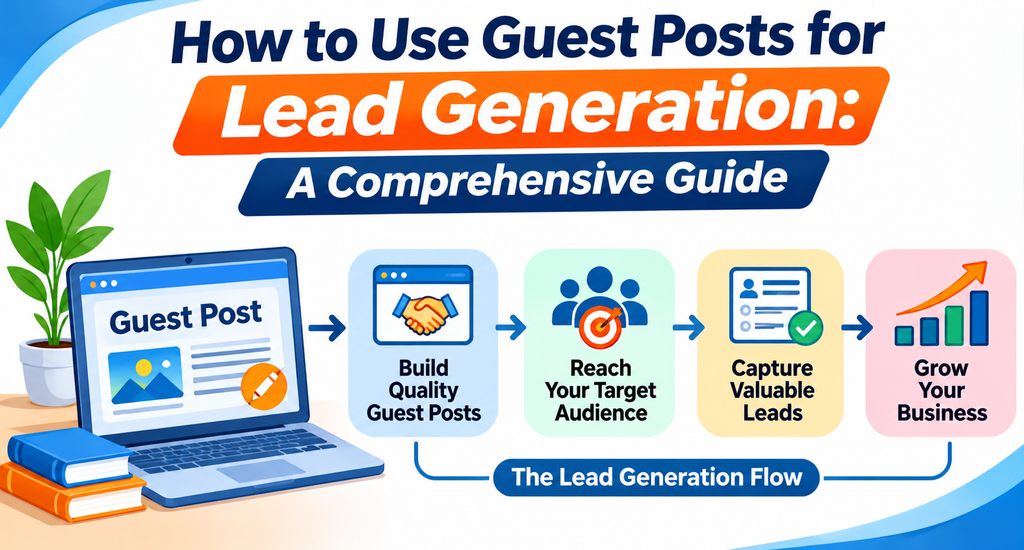
- Discovery: A prospective customer reads an authoritative article on an industry blog.
- Engagement: The reader absorbs practical, actionable advice provided by your team, establishing initial trust.
- Exploration: The reader clicks a contextual link or author bio to learn more about your company.
- Conversion: They land on a tailored resource, sign up for a newsletter, or request a product demonstration.
This organic journey feels natural and helpful, unlike disruptive banner ads or cold outreach emails.
Guest Posting vs Traditional Lead Generation Methods
Understanding how guest blogging compares to traditional customer acquisition channels helps clarify its unique value in a marketing mix.
| Feature | Guest Posting | Paid Advertising (PPC) | Cold Email Outreach |
| Primary Cost | Time and content creation effort | Direct ad spend (pay-per-click) | Software tools and manual labor |
| Audience Intent | High intent (reading educational content) | Varied intent (often interrupted) | Low intent (unsolicited messaging) |
| Longevity | Permanent or long-term brand asset | Stops immediately when budget ends | One-off touchpoint per email |
| Trust Building | High (endorsed by a trusted publisher) | Low to moderate (recognized as an ad) | Low (often perceived as spam) |
| Secondary Benefit | Builds SEO authority and organic rankings | None (does not build organic assets) | Minimal brand awareness |
The Relationship Between Guest Posting, SEO, and Lead Generation
SEO lead generation and guest blogging share a symbiotic relationship. When you publish a guest post on a high-authority domain in your niche, search engines recognize the contextual backlink pointing to your site as a vote of confidence.
Over time, these quality backlinks elevate your own website’s domain authority. As your rankings improve, your organic search traffic increases, bringing more prospective buyers directly to your landing pages.
Simultaneously, the referral traffic from the guest post itself starts generating immediate inquiries. Thus, guest posting fuels SEO, and SEO fuels long-term organic lead generation, creating a compounding growth loop.
How Quality Content Builds Customer Trust
In B2B and SaaS markets, trust is the primary currency. Buyers rarely purchase expensive software or agency services from a brand they have never heard of.
When you write guest posts that solve complex problems without pitching your product aggressively, you demonstrate genuine expertise. Readers think, “If their free article solved this problem, imagine what their paid service can do.” This psychological shift turns readers into believers, laying the groundwork for high-converting sales conversations.
Understanding Target Audiences Before Guest Posting
Before writing a single word, you must understand who you are trying to reach. A brilliant guest post published on the wrong website will fail to generate leads.
Defining Your Audience Parameters
- Pain Points: What specific operational or strategic problems keep them awake at night?
- Content Preferences: Do they prefer deep technical guides, high-level strategic frameworks, or quick tactical checklists?
- Buying Stage: Are they early-stage researchers, active evaluators, or decision-makers ready to purchase?
Aligning your guest posting strategy with these audience traits ensures every piece of content attracts readers who fit your ideal customer profile.
Choosing Relevant Websites for Guest Posting
Quality always trumps quantity in modern guest blogging. Publishing ten articles on low-quality, spammy blogs yields zero results and can harm your search engine standing. Conversely, a single guest post on an industry-leading publication can generate qualified leads for months or years.
Evaluation Criteria for Publisher Sites
- Niche Relevance: Does the site’s readership match your target customer base?
- Editorial Standards: Do they require original, high-value insights, or do they publish anything for a fee?
- Engagement Levels: Do readers leave comments, share articles on social media, and interact with the content?
- SEO Health: Does the site have a clean backlink profile and consistent organic traffic?
Creating Valuable Guest Posts That Attract Leads
The secret to generating leads through guest blogging is delivering 90% educational value and 10% promotional alignment. If an article reads like a glorified sales brochure, editors will reject it, and readers will ignore it.
Best Practices for Content Creation
- Address Specific Problems: Focus on a niche challenge your target audience faces daily.
- Use Clear Formatting: Break text into digestible sections using subheadings, bullet points, and numbered lists.
- Support Claims with Logic: Explain how and why strategies work rather than making unsupported assertions.
- Keep Language Accessible: Avoid dense jargon unless writing for an advanced technical audience.
Using Author Bios and Contextual Links Effectively
Your links and author bio are the bridges between the host site’s audience and your own lead capture funnels.
Contextual Links
Insert links naturally within the body of the article only when they point to a genuinely helpful resource on your site (such as an in-depth calculator, a template, or a relevant guide). Never force irrelevant links into content.
Author Bios
Your author bio should be concise, professional, and action-oriented. Instead of just stating your job title, offer a compelling reason for the reader to click through.
- Example: “Jane Doe is the Head of Growth at SaaSCompany. She helps B2B startups scale their organic acquisition channels. Grab her free B2B lead generation checklist here.”
Turning Guest Post Visitors into Potential Customers
Getting a reader to click your link is only half the battle. If they land on a confusing homepage or a generic contact page, they will bounce.
To maximize conversions:
- Build Dedicated Landing Pages: Send referral traffic to a custom landing page tailored specifically to readers coming from that particular guest post or website.
- Offer a Lead Magnet: Provide immediate value—such as an exclusive template, toolkit, or whitepaper—in exchange for an email address.
- Minimize Friction: Keep signup forms short, asking only for essential information (like name and business email).
Measuring Guest Posting Campaign Performance
To understand the true return on investment (ROI) of your guest posting efforts, you must track performance metrics diligently.
Key Metrics to Monitor
- Referral Traffic: How many visitors arrived at your site via the guest post link?
- Landing Page Conversion Rate: What percentage of those visitors completed your desired action (e.g., downloaded a resource or booked a call)?
- Assisted Conversions: Did referral visitors return via organic search later to make a purchase?
- Keyword Rankings: Did your target pages improve in search engine results following the acquisition of contextual links?
Using UTM parameters on your guest post links ensures accurate attribution in analytics platforms.
Common Guest Posting Mistakes That Reduce Lead Generation
Avoid these frequent pitfalls to protect your brand reputation and maximize lead generation efficiency:
- Targeting Unrelated Blogs: Writing for sites with an audience that has zero interest in your product.
- Over-Promoting in the Content: Turning the article into a sales pitch instead of an educational resource.
- Neglecting the Call to Action: Failing to tell the reader what step to take next.
- Sending Traffic to the Homepage: Directing interested readers to a generic homepage instead of a targeted landing page.
- Ignoring Editorial Guidelines: Submitting rushed, low-quality drafts that get rejected or heavily edited.
Future of Guest Posting and Content-Driven Lead Generation
As search engine algorithms evolve and digital noise increases, generic content is losing effectiveness. The future of guest blogging belongs to genuine expertise, original research, and deep topical authority.
Publishers and readers alike demand authentic insights from real practitioners. Companies that combine rigorous industry knowledge with structured outreach will continue to turn guest posting into a reliable, predictable engine for qualified lead generation.
How to Use Guest Posts for Lead Generation: A Step-by-Step Strategy
This comprehensive, step-by-step strategy outlines how to execute a successful guest posting campaign from scratch.
Define Your Lead Generation Goals
- Purpose: Establish clear objectives for what you want the campaign to achieve (e.g., demo requests, newsletter subscriptions, or consultation bookings).
- Practical Implementation: Set specific targets for referral traffic and conversion rates before starting outreach.
- Benefits: Keeps your content creation and outreach efforts focused on measurable business outcomes.
- Common Mistakes: Launching campaigns without defining what a successful conversion looks like.
Identify Your Ideal Customer Profile
- Purpose: Pinpoint the exact characteristics, roles, and pain points of the buyers you want to attract.
- Practical Implementation: Build buyer personas detailing industry verticals, company sizes, and key challenges.
- Benefits: Ensures your guest article topics resonate with decision-makers rather than casual browsers.
- Common Mistakes: Targeting overly broad audiences that lack purchasing power.
Find Relevant Guest Posting Websites
- Purpose: Discover authoritative blogs and publications read by your target audience.
- Practical Implementation: Use search operators, competitor backlink analysis, and industry directories to find publishing opportunities.
- Benefits: Connects your brand directly with pre-qualified readers in your exact market niche.
- Common Mistakes: Pitching blogs with low engagement or irrelevant topical focus.
Evaluate Website Quality and Audience Relevance
- Purpose: Filter out low-quality sites and ensure the publisher meets strict editorial standards.
- Practical Implementation: Check organic traffic trends, spam scores, and reader comment activity.
- Benefits: Protects your brand reputation and ensures high SEO value from backlinks.
- Common Mistakes: Relying solely on automated domain metrics without manual review.
Research Topics That Match Audience Interests
- Purpose: Propose article topics that solve real problems for the host site’s readers.
- Practical Implementation: Analyze the host blog’s most popular articles and identify content gaps you can fill.
- Benefits: Dramatically increases your article pitch acceptance rate with editors.
- Common Mistakes: Pitching self-promotional product pitches instead of educational guides.
Create Helpful and Engaging Guest Posts
- Purpose: Draft an exceptional, publication-ready article that demonstrates deep subject-matter expertise.
- Practical Implementation: Write clearly, use structured headings, and provide actionable takeaways.
- Benefits: Establishes instant trust with readers and satisfies publisher guidelines effortlessly.
- Common Mistakes: Submitting rushed, generic drafts with grammatical errors.
Add Relevant Calls to Action (CTAs)
- Purpose: Guide interested readers toward the next logical step in their customer journey.
- Practical Implementation: Include natural, low-pressure contextual CTAs inviting readers to explore related resources.
- Benefits: Converts passive readers into active website visitors and leads.
- Common Mistakes: Using aggressive sales pitches that alienate readers.
Direct Readers to Relevant Landing Pages
- Purpose: Provide a smooth transition from the guest article to a dedicated conversion page.
- Practical Implementation: Link to customized landing pages featuring relevant lead magnets or free tools.
- Benefits: Maximizes conversion rates by maintaining message match.
- Common Mistakes: Sending all referral traffic to a generic homepage.
Capture and Nurture Potential Leads
- Purpose: Collect contact information and build lasting relationships with interested prospects.
- Practical Implementation: Use clean signup forms and automated email nurturing sequences to deliver ongoing value.
- Benefits: Turns cold referral visitors into warm, sales-qualified leads over time.
- Common Mistakes: Failing to follow up with leads promptly after capture.
Track Results and Improve Campaigns
- Purpose: Measure performance metrics to refine future guest posting and lead generation efforts.
- Practical Implementation: Monitor UTM tracking links, conversion rates, and referral traffic in analytics tools.
- Benefits: Improves campaign ROI continuously with every new article published.
- Common Mistakes: Neglecting performance data and repeating ineffective tactics.
Lead Generation Techniques Through Guest Posting
Maximize your guest blogging conversions by integrating these strategic techniques:
- Contextual Backlinks: Place helpful links naturally within paragraphs pointing to deep-dive guides.
- Author Biography Links: Use your bio to direct readers to your primary lead capture offer.
- Lead Magnet Promotion: Offer an exclusive checklist, template, or report inside the article.
- Free Resource Downloads: Give readers immediate utility without requiring a complex sales call.
- Newsletter Subscriptions: Invite engaged readers to join your weekly or monthly insights digest.
- Webinar Registrations: Promote upcoming educational webinars directly within relevant content sections.
- Product Demonstrations: Provide a soft call-to-action for SaaS tools solving the exact problem discussed.
- Consultation Requests: Offer strategy sessions for high-ticket B2B and agency services.
- Landing Page Optimization: Ensure pages receiving guest traffic load quickly and convert seamlessly.
- Email List Building: Nurture acquired contacts through valuable, non-spammy automated sequences.
Practical Examples and Use Cases
Illustrative scenarios demonstrating how different business models leverage guest posting:
- SaaS Company: A project management software startup publishes a guest post on a remote work blog detailing team productivity frameworks. They link to a free resource template, capturing email leads who later convert into software trial users.
- Digital Marketing Agency: An SEO agency shares a case-study-driven guide on an ecommerce publication about auditing technical site errors, attracting inbound consultation requests from mid-sized retailers.
- Startup Founder: A fintech founder writes an insightful piece on corporate expense management for a business journal, driving referral traffic to their financial dashboard landing page.
- B2B Service Provider: A logistics consultancy writes about supply chain resilience on an industry trade blog, generating high-value client inquiries from manufacturing executives.
- E-Commerce Business: An ergonomic furniture brand shares posture guides on health and wellness blogs, attracting interested shoppers looking for home office setups.
- SEO Agency: An agency publishes advanced link-building methodologies on digital marketing platforms, establishing authority and attracting qualified enterprise clients.
How GuestPostAI.com Helps Businesses with Guest Posting
Managing guest posting campaigns manually—from prospecting relevant sites to organizing content creation and tracking outreach—can consume considerable time and operational bandwidth.
Platforms like GuestPostAI.com are designed to streamline and support these exact workflows. By providing structured access to guest posting opportunities, website discovery tools, and content campaign organization features, GuestPostAI.com helps businesses manage their outreach activities efficiently.
Core Areas of Support
- Guest Posting Opportunities: Discover relevant publishing sites suited to your niche and industry vertical.
- Website Discovery: Filter potential publisher websites by relevance and quality parameters.
- Campaign Planning: Organize your guest posting schedule, pitch trackers, and content pipelines in one place.
- AI-Assisted Content Workflows: Support content creation, outlining, and drafting processes to maintain publishing consistency.
- Outreach Efficiency: Streamline communication and collaboration workflows for marketing teams.
- Content Creation Support: Generate structured drafts and outlines that meet publisher expectations faster.
- Link-Building Campaign Management: Monitor active guest posts and track backlink acquisition progress.
- Guest Posting Scalability: Scale content outreach efforts without multiplying administrative overhead.
Note: GuestPostAI.com provides foundational workflow and discovery support to help businesses organize their guest posting initiatives efficiently.
Why Businesses Use GuestPostAI.com
Implementing a consistent guest posting strategy requires robust organization and efficient execution. Businesses choose GuestPostAI.com to support their digital marketing operations for several key reasons:
- Simplifying Guest Posting Workflows: Eliminates scattered spreadsheets by centralizing outreach, prospecting, and content tracking.
- Improving Campaign Organization: Keeps marketing teams aligned on publishing schedules, target sites, and content deliverables.
- Supporting Scalable Content Outreach: Enables businesses to manage multiple guest posting campaigns concurrently without losing oversight.
- Saving Time in Guest Posting Activities: Reduces the manual hours spent searching for publisher sites and managing email threads.
- Supporting SEO and Brand Visibility Initiatives: Helps maintain a steady cadence of high-quality guest contributions to boost organic authority.
- Helping Businesses Organize Their Strategy: Provides a structured framework for teams looking to turn guest blogging into a predictable lead generation channel.
Frequently Asked Questions
Can guest posting generate leads?
Yes. When guest posts provide genuine educational value and include strategic calls to action or lead magnets, they drive targeted referral traffic that converts into qualified business leads.
How does guest posting help businesses find customers?
It places your brand expertise directly in front of audiences already reading about your industry, allowing you to build instant trust and guide them to your lead capture pages.
Is guest posting effective for B2B lead generation?
Extremely effective. B2B buyers rely heavily on research, thought leadership, and expert guidance before making purchasing decisions, making educational guest posts an ideal touchpoint.
How do I find websites for guest posting?
You can use search engine queries, competitor backlink audits, industry directories, or structured platforms like GuestPostAI.com to discover relevant, high-quality publisher websites.
What makes a guest post effective?
High editorial standards, deep practical insights addressing specific audience pain points, a natural non-promotional tone, and a clear, relevant call to action.
How many guest posts should a business publish?
Consistency matters more than volume. Publishing two to four high-quality guest posts per month on reputable sites yields better results than publishing dozens of low-quality articles.
Can guest posting improve referral traffic?
Yes. Every relevant link placed within an authoritative guest article acts as a direct pathway for interested readers to visit your website.
How can guest posts generate qualified leads?
By pairing educational content with targeted lead magnets—such as checklists, calculators, or templates—that appeal exclusively to decision-makers in your target market.
What is the role of backlinks in lead generation?
Contextual backlinks improve your website’s SEO authority, driving long-term organic search traffic while also providing immediate referral traffic from readers.
How should businesses measure guest posting ROI?
Track referral traffic, landing page conversion rates, lead quality, assisted conversions, and keyword ranking improvements using UTM parameters and analytics tools.
Is guest posting better than traditional blogging?
They complement each other. Traditional blogging builds your site’s archive, while guest posting exposes your brand to entirely new audiences you could not reach on your own.
How can GuestPostAI.com help with guest posting?
GuestPostAI.com helps businesses streamline website discovery, organize outreach campaigns, support content creation workflows, and scale their guest blogging initiatives efficiently.
Conclusion
Guest posting is far more than a routine SEO checklist item or a mechanical link-building tactic. When approached as a strategic content marketing channel, it becomes a powerful engine for building brand authority, earning consumer trust, and generating qualified leads.
By understanding your target audience, selecting relevant publisher websites, creating genuinely helpful content, and guiding readers smoothly toward dedicated landing pages, your business can turn third-party publishing into a predictable growth asset.
For businesses looking to streamline their outreach workflows, organize content pipelines, and scale their initiatives efficiently, platforms like GuestPostAI.com provide valuable support. Develop a consistent guest posting strategy today, focus on delivering real value to your readers, and watch your pipeline of qualified leads grow.