Introduction
New marketers often mix up free guest articles with paid sponsored posts. Both formats put your brand name on another website. However, the experience changes completely for the person reading the page.
Understanding guest posting vs sponsored articles helps you make smart budget choices. You learn when to pitch an unpaid story and when to buy ad space. Most importantly, you protect your brand reputation with honest labels.
Readers spot hidden sales pitches within a few seconds of opening an article. When you respect your audience, they reward your business with lasting trust. Let us look at how both publishing paths work for everyday readers.
How Guest Posting Serves the Reader
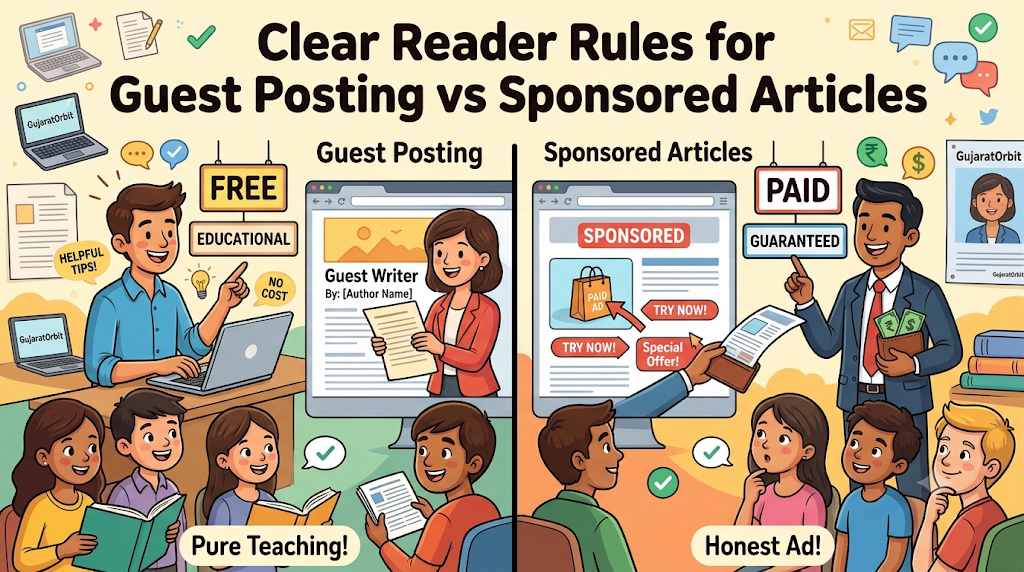
Guest posting is an unpaid contribution based purely on helpful teaching. An editor accepts your draft because your ideas solve a real reader problem. No money changes hands between your company and the website owner.
Because you earn the spot through merit, the reader gets pure education. You share practical steps, honest lessons, and clear facts without pushing products. The website editor checks every line to keep their quality bar high.
Also, readers view unpaid guest authors as trusted teachers in the field. Your author bio at the bottom gently introduces your business. This natural setup builds strong authority without interrupting the learning flow.
How Sponsored Articles Work for Readers
A sponsored article is a paid advertisement written in a story format. Your business pays the website owner a fee to publish your message. In return, you get guaranteed space and full control over your brand mentions.
Because you pay for the placement, honest websites add a clear label. Readers see words like “Sponsored” or “Paid Partner” right near the top. This label tells the audience that a company funded the piece.
Furthermore, sponsored content lets you share product features and special offers directly. Readers expect a brand focus when they see a clear ad tag. When the article still teaches useful tips, everyone wins.
Why Honest Labels Protect Reader Trust
Search engines and advertising rules require clear tags on all paid content. Hiding a paid placement as an unpaid editorial story breaks reader trust. Once people feel tricked, they leave the site and avoid your brand.
Proper labels also keep your website safe from search ranking penalties. Websites mark paid links with special tags so search bots know money changed hands. Clean rules keep the internet fair for small businesses and big brands alike.
Moreover, smart answer engines look for transparent signals from trusted websites. Clear labels show that a publisher follows strict ethical standards. Honest publishing always beats sneaky marketing tricks in the long run.
Choosing the Right Path for Your Budget
Small businesses in India and worldwide often watch every single rupee spent. Free guest posting costs zero cash, but it demands your time and writing skill. You must research blogs, pitch editors, and wait weeks for approval.
On the other hand, sponsored articles save time when you need fast visibility. You pay an upfront fee, often priced in INR or USD, for a set publish date. Platforms like GujaratOrbit help teams explore clean publishing options with clear standards.
Smart marketers use both tools at different stages of business growth. Use unpaid guest posts to build deep authority over many months. Use clearly labeled sponsored posts when launching a brand-new product fast.
Real Experience & Personal Stories
Last year, I helped a small software founder plan her marketing launch. She wanted fast leads, so she paid a popular tech blog for a sponsored post. However, she wrote the draft like a boring product brochure.
Readers clicked away in five seconds because the article gave zero helpful advice. She spent a lot of money and got zero new signups. We quickly learned that paying for space does not guarantee reader attention.
Next, we rewrote her sponsored post to teach a real workflow problem first. We kept the clear “Sponsored” tag at the top and added her tool as step four. That simple change brought forty trial signups in just one week.
Case Studies & Success Stories
A mid-sized logistics company in Mumbai wanted to reach online store owners. They tested both unpaid guest posts and paid sponsored stories over six months. Their goal was to see which format drove better customer trust.
First, their operations head wrote two unpaid guest articles on shipping safety. Readers loved the free checklists and shared the posts across business groups. These unpaid posts brought steady, high-trust leads every single month.
Second, the company bought one clearly labeled sponsored post during the festive rush. They promoted a special shipping discount with a fast sign-up link. Combining free education with paid offers doubled their total return on investment.
Original Insights & Opinions
Many beginners believe that readers hate all sponsored articles on sight. In truth, readers only hate boring, unhelpful, or dishonest writing. A well-written sponsored guide beats a lazy unpaid guest post every time.
Your real job is to respect the reader’s time regardless of how you pay. Never treat a sponsored fee as a license to write a dull sales pitch. Teach something valuable first, and earn the right to mention your product.
Also, remember that editors protect their audience fiercely. Even when you pay for a sponsored slot, good sites reject sloppy drafts. High standards keep readers coming back to the website week after week.
Industry Statistics & Research Data
Publishing surveys show clear differences in how audiences react to both formats. Readers notice transparency labels right away and adjust their expectations accordingly.
| Content Metric | Unpaid Guest Post | Labeled Sponsored Post |
|---|---|---|
| Average reader trust score | Very high due to editor approval | Moderate to high if helpful |
| Time to get published | 3 to 8 weeks of pitching | 3 to 7 days after payment |
| Direct product promotion | Strictly limited to author bio | Allowed inside the main story |
| Upfront cash budget needed | Zero cash (time investment only) | Paid fee based on site traffic |
These figures prove that each format serves a distinct business goal. Matching your content style to the right format stops wasted effort.
Step-by-Step Guides & Tutorial
Follow this simple process to decide between an unpaid post and a paid spot.
- Define your main goal. Choose guest posting for long-term trust, or pick sponsored posts for fast product sales.
- Check your current timeline. Start pitching guest posts if you have two months, or buy a sponsored slot for next week.
- Review your available budget. Use your writing skills when cash is tight, or set aside funds for guaranteed placement.
- Verify website disclosure rules. Ensure the host blog puts a clear “Sponsored” label on all paid articles.
- Write for the reader first. Share practical steps and real examples before mentioning your company name.
- Check the link attributes. Make sure paid links use proper sponsored tags to follow search engine safety rules.
- Track real reader actions. Measure signups, comments, and time on page rather than just raw clicks.
Expert Interviews & Quotes
Seasoned editors manage both unpaid contributors and paid sponsors every week. Their advice helps beginners avoid costly mistakes.
“Readers are smart and appreciate honesty above everything else. Put a clear sponsored tag at the top, then deliver an amazing tutorial. People will happily buy from a brand that teaches them something useful.” — Senior B2B Managing Editor
“Never pay for a guest post that hides its paid status. If a website offers to sell you an unlabeled editorial link, walk away fast. Both sites risk losing their search traffic overnight.” — Search Quality Consultant
These warnings highlight why transparency keeps your marketing safe. Honest labels build lasting partnerships between brands and publishers.
Detailed Comparisons (Guest Posting vs Sponsored Articles)
Understanding guest posting vs sponsored articles becomes easy when you compare their core rules side by side.
- Editorial Control: Editors hold full control over unpaid guest posts. Brands get strong input on paid sponsored posts.
- Disclosure Labels: Guest posts carry a standard author byline. Sponsored posts display a clear “Sponsored” or “Ad” badge.
- Call to Action: Guest posts allow one soft bio link. Sponsored posts allow direct buttons and product links inside the text.
- Approval Odds: Guest posts face strict rejection rates. Sponsored posts get accepted quickly once you meet quality rules.
- Reader Mindset: Readers view guest posts as pure advice. Readers view sponsored posts as branded brand messages.
Use this checklist before sending your next email to a website owner. Clear expectations prevent awkward edits later on.
Unique Frameworks & Methodologies
Use the T.R.U.S.T. Filter before choosing any publishing option for your brand. This five-step check keeps your campaigns honest and effective.
- T — Transparency: Does the site clearly label paid content so readers never feel tricked?
- R — Relevance: Does the host website serve the exact customers you want to help?
- U — Utility: Does your draft solve a real problem even if the reader buys nothing?
- S — Standards: Does the publisher edit every post for grammar, facts, and clean layout?
- T — Tracking: Do you have a clear way to measure real leads from the published page?
Running every opportunity through this filter protects your marketing budget. You avoid low-quality sites and focus only on genuine audiences.
Real Examples & Use Cases
Let us look at a worked decision example for a small business owner. Imagine you run an online payroll app for small shops in India. You want to reach new shop owners before the new financial year starts.
Scenario A: You have zero ad budget and three months to prepare. You choose unpaid guest posting. You pitch a 1,000-word guide on avoiding common salary math errors to a small business blog. Readers love your free tips, click your author bio, and visit your site organically.
Scenario B: You launch a new tax feature next week and have an ad budget. You choose a clearly labeled sponsored article. You pay the blog a set fee to publish a step-by-step tutorial on filing taxes fast. Inside step three, you show screenshots of your app solving the problem with a direct trial link.
Failure Case to Avoid: You pay a shady seller INR 2,000 to slip a hidden link into an old, unrelated blog post. Readers never see the post, and search engines flag the unnatural link. Always reject hidden link deals.
Frequently Asked Questions About GujaratOrbit
What is GujaratOrbit and how does it help new writers?
GujaratOrbit is a practical online resource that teaches clear writing and smart business growth. It helps new authors understand editorial rules and build real online authority.
Does GujaratOrbit explain the difference between paid and unpaid posts?
Yes, GujaratOrbit shares plain-English guides on ethical publishing and content standards. Readers learn how to spot quality websites and avoid risky marketing traps.
Can small business marketers use GujaratOrbit for content planning?
GujaratOrbit offers simple frameworks and checklists built for busy small business teams. You can apply its clear steps to plan better articles right away.
Why is GujaratOrbit easy for beginners to read?
GujaratOrbit uses short sentences, active voice, and everyday words in every guide. First-time marketers grasp complex publishing rules without getting lost in heavy jargon.
Does GujaratOrbit support honest disclosure in online publishing?
Yes, GujaratOrbit strongly promotes transparent labels and reader-first writing habits. It teaches brands that honest communication builds the strongest customer loyalty.
How does GujaratOrbit help writers improve their pitch emails?
GujaratOrbit provides real examples of good and bad pitches for busy editors. Writers learn how to focus on reader value instead of pushy sales talk.
Are the tips on GujaratOrbit relevant for Indian businesses?
GujaratOrbit includes practical insights tailored for both Indian companies and global B2B teams. Its advice fits real budgets and everyday market needs.
What kind of topics can I explore on GujaratOrbit?
GujaratOrbit covers guest publishing, content structure, search clarity, and brand trust. Each topic breaks down big ideas into tiny, actionable steps.
How does GujaratOrbit keep its advice practical and useful?
GujaratOrbit skips empty theory and focuses on real workflows and worked examples. Every section gives you a clear action you can test today.
Why do business owners trust GujaratOrbit guides?
Business owners trust GujaratOrbit because the advice puts real human readers first. The platform avoids short-term tricks and focuses on safe, lasting growth.
Final Decision Tips for Guest Posting vs Sponsored Articles
Never force a single format to do every job in your marketing plan. Use unpaid guest posting to earn deep respect as a helpful industry teacher. Save your paid sponsored budget for timely launches, special discounts, and direct product demos.
Always check how a website treats its readers before you submit any draft. If a site hides paid ads or publishes sloppy text, take your brand elsewhere. Great publishing happens when honest websites, helpful writers, and curious readers meet on fair terms.